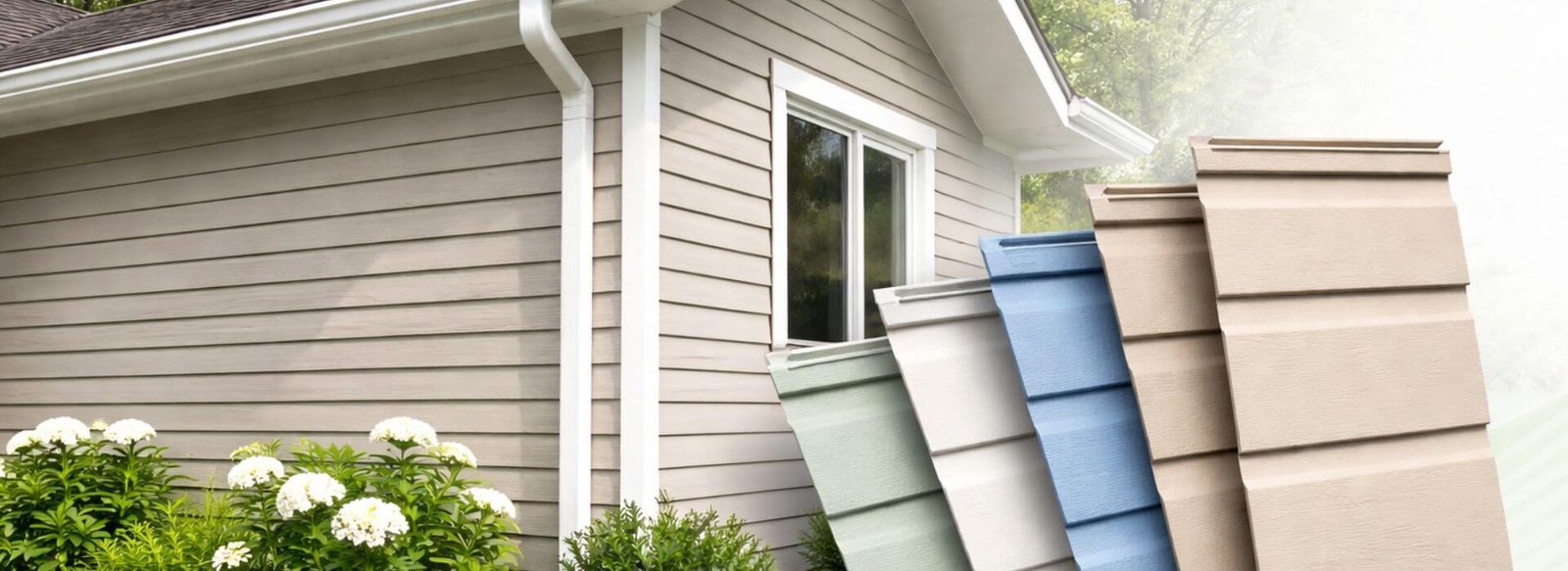
Choosing the right siding for your home is an important decision that affects durability, maintenance, energy efficiency, and overall curb appeal. Different siding materials offer different advantages depending on climate conditions, budget, and long-term maintenance expectations. Among the most common options homeowners consider are vinyl siding, fiber cement siding, and stucco siding.
This guide explains how each material works, what benefits it offers, and what factors you should evaluate before making a decision.
Key factors to consider when choosing siding
Before selecting a siding material, it is helpful to understand the main factors that influence long-term performance and satisfaction:
- Durability: How well the material withstands weather, moisture, and daily wear.
- Maintenance requirements: Some materials require occasional cleaning while others may need repainting or repairs.
- Cost: Installation and long-term upkeep costs can vary significantly between materials.
- Appearance: Each siding type creates a different architectural style and visual texture.
- Energy efficiency: Certain materials may contribute to better insulation and temperature control.
Evaluating these factors helps homeowners select siding that fits both their property and long-term expectations.
Vinyl siding
Vinyl siding is one of the most widely used exterior cladding materials in residential construction. It is made from PVC and designed to provide a lightweight but durable protective layer for exterior walls.
Benefits of vinyl siding
- Low maintenance requirements
- Resistant to moisture and pests
- Available in many colors and styles
- Typically more affordable than many other siding materials
Because vinyl siding does not require painting and can be cleaned with simple washing, many homeowners choose it for convenience and cost efficiency.
Considerations
While vinyl siding performs well in many environments, it can crack under extreme impact and may fade over many years of sun exposure. Proper installation is important to allow expansion and contraction caused by temperature changes.
Fiber cement siding
Fiber cement siding is a composite material made from cement, sand, and cellulose fibers. It is designed to replicate the appearance of wood while offering greater resistance to moisture and fire.
Benefits of fiber cement siding
- Strong resistance to weather and temperature changes
- Fire resistant material
- Long lifespan when properly maintained
- Can mimic the appearance of natural wood siding
Fiber cement siding is often selected by homeowners who want the look of wood but with improved durability.
Considerations
This material is heavier than vinyl and typically requires professional installation. It may also require repainting over time to maintain its appearance.
Stucco siding
Stucco is a traditional exterior finish made from a mixture of cement, sand, lime, and water. It is applied in layers over a supporting structure to create a continuous, solid exterior surface.
Benefits of stucco siding
- Durable exterior coating
- Distinctive architectural appearance
- Good resistance to fire and pests
- Can last for decades with proper maintenance
Stucco is commonly used in certain architectural styles and can create a smooth or textured exterior finish.
Considerations
Stucco installation requires skilled application and proper structural preparation. In climates with frequent moisture or freeze-thaw cycles, additional care is necessary to prevent cracking.
Which siding option is best?
There is no single siding material that is best for every home. The ideal choice depends on factors such as budget, local climate, aesthetic preference, and long-term maintenance expectations.
- Vinyl siding is often chosen for affordability and low maintenance.
- Fiber cement siding is valued for durability and its wood-like appearance.
- Stucco siding is preferred for its distinctive style and long-lasting exterior finish.
Carefully evaluating these characteristics will help homeowners select siding that supports both protection and visual appeal.
Selecting siding is a long-term investment in your home’s exterior performance and appearance. Understanding how vinyl, fiber cement, and stucco siding differ can help homeowners make a well-informed decision that suits their needs, climate conditions, and architectural preferences.
By considering durability, maintenance, cost, and aesthetics, homeowners can confidently choose a siding material that will protect their property for many years.